
How to Use a Heavy-Duty Dish Wash Scourer Sponge Safely and Effectively
Discover how to get the best cleaning results from your heavy-duty dish wash scourer sponge while extending its lifespan and protecting cookware.
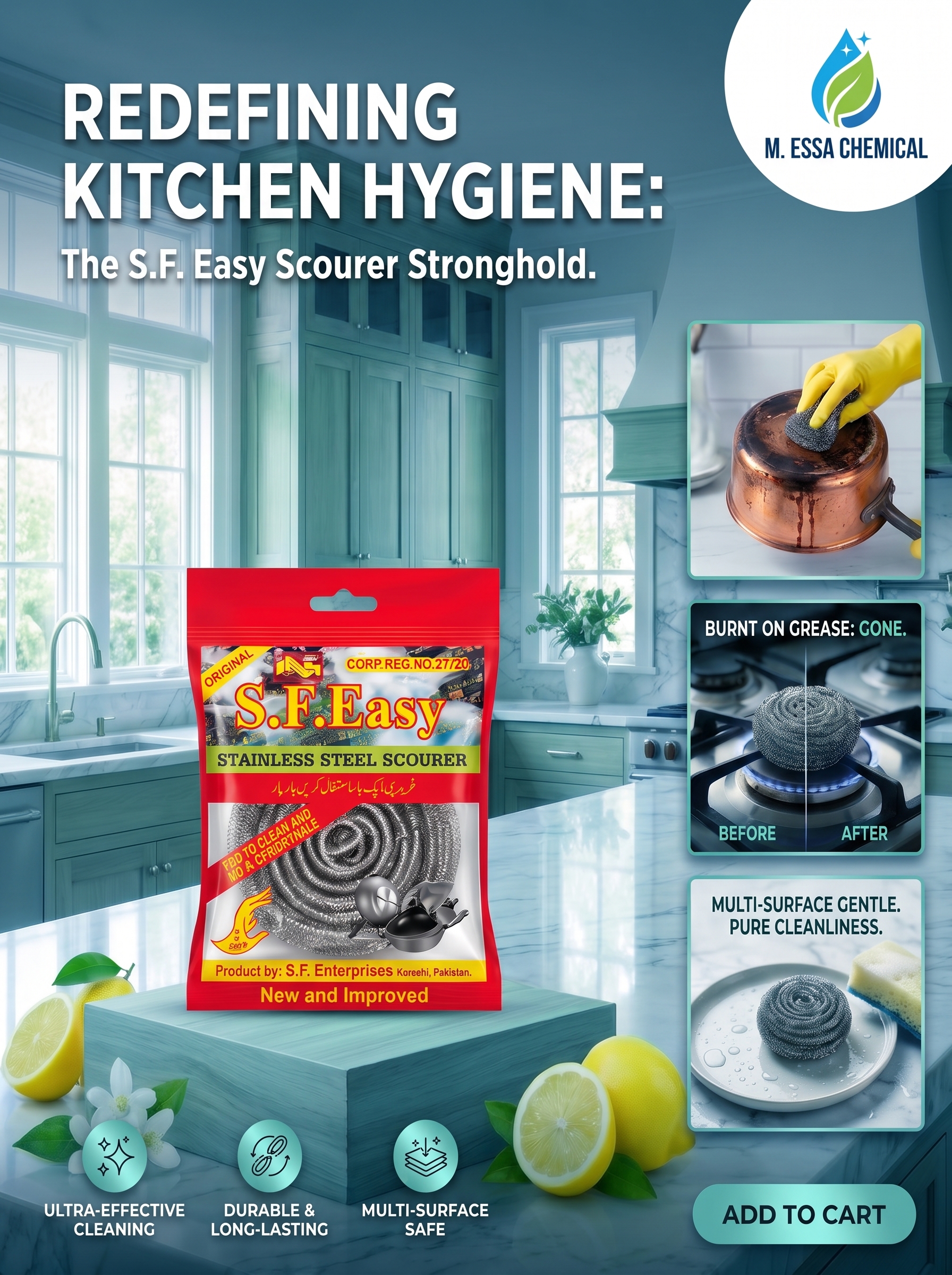
Keeping your kitchen cookware spotless requires the right tools and effective cleaning techniques. Grease, burnt food residue, and stubborn stains can take a heavy toll on your daily kitchen routine. The Premium Dish Wash Scourer Sponge from M. Essa Chemicals offers a durable solution designed to streamline your dishwashing process in both household and commercial kitchens. In this guide, we explore how to maximize the performance of your kitchen cleaning pad safely and efficiently.
Benefits of Using a Dual-Layer Scourer Sponge
Using a dual-layer kitchen cleaning pad provides a balanced combination of abrasive scrubbing power and gentle foam distribution. Here are the primary benefits of incorporating a heavy-duty dish scourer into your daily cleaning routine:
- Efficient Cookware Cleaning: Quickly loosens stubborn food residue, dried sauce, and heavy grease without requiring excessive physical effort.
- Rich Foam Generation: The soft sponge backing absorbs water and liquid detergent, generating rich foam to cover larger surface areas easily.
- Ergonomic Comfort: Designed to offer a firm, comfortable grip during extended dishwashing sessions in home or restaurant kitchens.
- Long-Lasting Material: High-density construction resists tearing, ensuring a long service life and high cost-effectiveness.
- Versatile Application: Ideal for stainless steel pots, ceramic plates, cookware, kitchen sinks, and food preparation counters.
Step-by-Step Usage Guide for Daily Dishwashing
To achieve maximum cleaning efficiency while preserving your cookware and kitchen surfaces, follow these simple steps:
Step 1: Wet the Sponge
Submerge or rinse your Premium Dish Wash Scourer Sponge under warm or lukewarm running water. A moist sponge absorbs dishwashing liquid much better and creates a richer lather.
Step 2: Apply Dishwashing Liquid
Pour a small amount of liquid dish soap directly onto the soft sponge side. Squeeze the sponge gently a few times to distribute the liquid and produce a rich cleaning foam.
Step 3: Choose the Right Surface Side
Use the abrasive scourer side for heavy-duty scrubbing on stainless steel pans, cast iron, or sink basin stains. Switch to the softer sponge side for delicate glassware, ceramic plates, and lightly soiled utensils.
Step 4: Scrub Gently in Circular Motions
Scrub cookware using controlled circular motions. Allow the combination of liquid soap and abrasive texture to lift grease rather than applying extreme downward pressure.
Step 5: Rinse and Dry
Thoroughly rinse all cookware with clean water. Once complete, rinse the sponge thoroughly to wash away food particles, squeeze out excess moisture, and let it dry naturally in a well-ventilated dish rack.
Important Safety and Sponge Care Tips
Proper maintenance ensures optimal kitchen hygiene and prevents surface damage on delicate items. Keep these essential safety guidelines in mind:
- Avoid Delicate Polished Surfaces: Do not use the abrasive side on delicate polished stainless steel, soft plastics, or non-stick coatings unless recommended, as it may cause micro-scratches.
- Rinse Thoroughly After Every Use: Always rinse out leftover soap, grease, and food fragments. Trapped food debris can lead to unpleasant odors and bacteria growth.
- Store in a Dry Place: Keep your sponge in an elevated, draining sponge holder rather than leaving it in standing water at the bottom of the sink.
- Replace When Excessively Worn: Replace your kitchen scrubber when the abrasive layer starts to shred, lose stiffness, or become permanently discolored.
- Keep Away from Children: Store cleaning pads and chemical detergents safely away from young children.
Frequently Asked Questions
Can I use this scourer sponge on non-stick pans?
It is best to use only the soft sponge side on delicate non-stick coatings. The heavy-duty abrasive layer is designed for tough stainless steel, ceramic, and untreated metal cookware.
How often should I replace my kitchen dish wash sponge?
For regular household use, it is recommended to replace your dishwashing sponge every 2 to 4 weeks, or sooner if it shows severe signs of wear, loss of abrasive texture, or persistent odors.
How do I prevent bad odors in my dish scrubber?
Rinse the sponge thoroughly with warm water after each use, squeeze out all excess water, and allow it to air dry completely in an open, dry spot.
Upgrade your daily dishwashing routine with superior cleaning performance. Shop the Premium Dish Wash Scourer Sponge from M. Essa Chemicals today for heavy-duty kitchen cleaning that lasts!